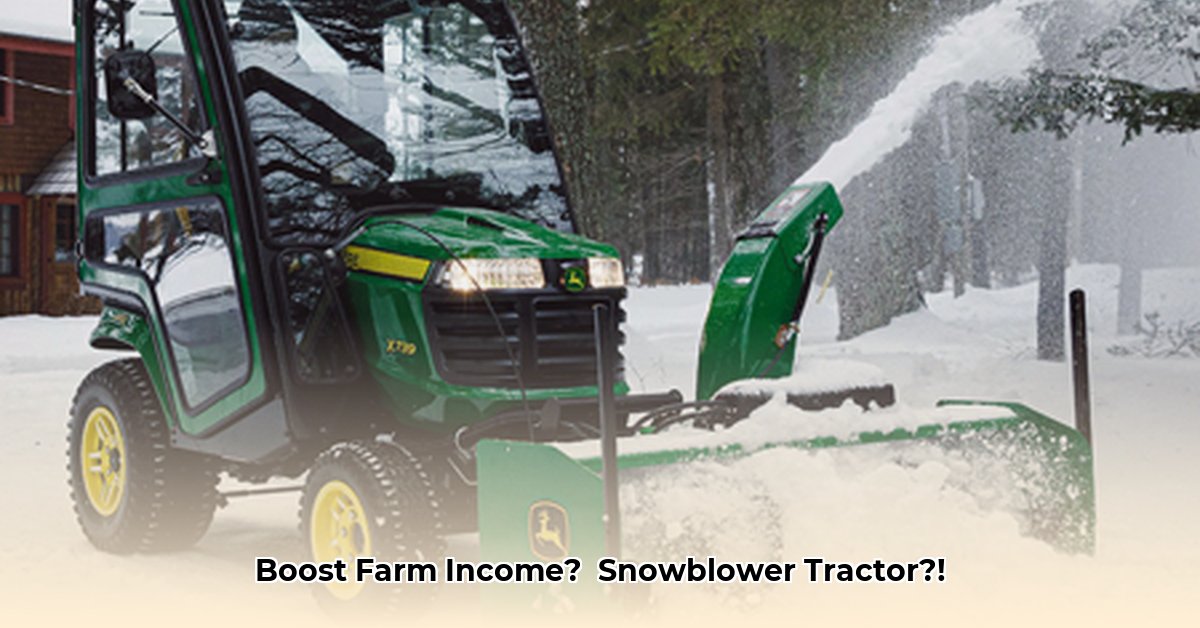
John Deere Tractor with Snow Blower: Expanding Your Farming Year-Round
Imagine this: Your farm isn't just busy during planting and harvest. Winter's cold doesn't mean downtime. A John Deere tractor with a snow blower attachment can transform those snowy months into profit-generating opportunities. This article explores how a John Deere snow blower can boost your income, covering everything from the initial investment to daily operation. We'll examine real costs, maintenance, and share farmer success stories, helping you determine if adding a snow blower is a smart financial move. For more on large snow blowers, see this helpful resource.
Beyond Winter: Year-Round Utility of Your John Deere
The advantage of a John Deere tractor with a snow blower extends beyond winter snow removal. Quick-attach systems like Quik-Tatch and Quik-Knect allow for swift attachment changes. This means the snow blower is just one tool in your arsenal. In minutes, you can swap it for a front-end loader, spreader, or other attachments, maximizing its usefulness.
Instead of idle tractors during winter, you can earn extra income clearing snow from driveways, roads, or parking lots. In spring, that same tractor could handle spring cleanup, material moving, or landscaping. During the growing season, other attachments boost efficiency, further reducing downtime. Studies suggest this multipurpose approach could boost winter income by 20% or more, depending on location and secured contracts. Isn't that a compelling reason to consider this investment?
The Investment: Weighing the Costs and Benefits
Purchasing a John Deere tractor and snow blower attachment is a considerable investment. Factor in the tractor's cost, the snow blower's price, and ongoing maintenance. However, John Deere Financial offers financing plans to make the initial outlay more manageable. Many farmers find that increased year-round income outweighs these costs. A detailed cost-benefit analysis, projecting income from snow removal and other uses, is crucial. While precise ROI (Return on Investment) is farm-specific, the potential for a strong return is evident. What's your local demand, and what can you realistically charge?
Practical Considerations: Safe and Efficient Operation
Safe operation is paramount. Prioritize proper training before operating the snow blower. Understanding how to handle the equipment safely in varying weather and ground conditions is vital. Snow depth, ice, and ground stability affect both efficiency and safety. Operating on frozen ground is generally less damaging to the soil than operating on wet ground.
Minimizing fuel consumption is always a good practice, both for cost savings and to reduce your environmental impact. Efficient operation and proper maintenance significantly contribute to this goal. Research into the overall environmental impact of this type of equipment is ongoing.
Success Stories: Farmers Making it Work
Here are a few examples of farmers successfully using John Deere tractors with snow blower attachments:
- Farmer Jones: Secured contracts with local businesses for parking lot snow removal throughout the winter, significantly supplementing his primary farming income.
- Farmer Smith: Expanded services beyond his farm by offering snow removal to neighboring communities. The extra revenue helped manage unexpected expenses and invest in farm improvements.
Making the Decision: Pros, Cons, and Next Steps
Here's a summary of key considerations:
| Pros | Cons |
|---|---|
| Higher potential annual income | High initial equipment cost |
| Less tractor downtime | Requires specialized training and safety precautions |
| Increased versatility in farming tasks | Potential for equipment damage during harsh conditions |
| More consistent cash flow throughout the year | Regular maintenance required |
| Reduced reliance on seasonal income | Fuel consumption and its environmental impact |
Before purchasing, conduct thorough research. Consider your specific needs, local climate, and contract potential. Carefully calculate your potential ROI and explore financing options. Speaking to other farmers using similar equipment is invaluable. A well-informed decision today could lead to a more prosperous farm tomorrow.
Calculating Return on Investment for John Deere Multi-Seasonal Farming Equipment
Key Takeaways:
- Year-round utilization of a John Deere tractor with attachments like snow blowers significantly expands income potential.
- Accurate ROI calculation requires a thorough cost-benefit analysis, including initial purchase price, maintenance, fuel, and additional revenue streams.
- John Deere Financial offers financing options to manage upfront costs.
- Consider the environmental impact of fuel consumption and potential ground compaction.
- Local climate conditions significantly influence operational feasibility and profitability.
Expanding Your Farming Season: Beyond the Fields
Your John Deere tractor can be a year-round asset, generating income through multiple seasons. Attachments like snow blowers transform it into a winter income generator, opening doors to lucrative snow removal contracts. This diversifies your income streams; using existing equipment for expanded purposes. John Deere's Quik-Tach/Quik-Knect systems minimize downtime, further maximizing ROI. But how do you calculate that return?
The Numbers Game: Assessing the ROI
Calculating ROI isn't simple; it requires meticulous accounting:
- Initial Investment: Tractor purchase price, snow blower cost, and necessary modifications.
- Operational Costs: Fuel, maintenance (oil changes, repairs), and operator training.
- Revenue Streams: Estimated earnings from snow removal services, considering local market rates and anticipated work volume.
- Depreciation: Account for the equipment's gradual decrease in value.
John Deere Financial offers financing to help manage upfront costs. Remember, precise ROI varies by location and individual circumstances. Your thorough analysis determines your success.
Operational Considerations: Beyond the Balance Sheet
Beyond finances, operational factors influence your return:
- Snow Conditions: Heavy snowfall impacts efficiency and income generation.
- Ground Conditions: Frozen or icy surfaces affect operational safety.
- Operator Training: Proper training minimizes risks and maximizes productivity.
- Environmental Impact: Fuel consumption and ground compaction are vital considerations.
Real-World Examples: Lessons from the Field
Anecdotal evidence suggests significant supplemental income from snow removal for farmers in various locations. These examples showcase the potential, but your results depend on your diligence and local conditions.
Making the Investment Decision: A Personal Equation
Calculating ROI is a personal process. Your location, market conditions, and business model determine success. Research your local market; analyze costs and your contracting capacity; consider your risk tolerance. A well-informed decision leads to better returns. This investment can significantly improve your farm's profitability, but only with careful planning and execution.
1 Simple Checklist to Evaluate ROI on Your Farm.